In brief
In tarot, The Moon often represents uncertainty, imagination, intuition and perceptions that cannot yet be verified. It does not necessarily announce deception or danger. It describes a moment for moving slowly, testing what we feel and accepting that part of the landscape remains out of view.
What does it mean to see only partly?
Moonlight is reflected light. That physical fact holds a useful metaphor: what we see under The Moon arrives mediated, softened and altered by distance. The outlines exist, but the mind completes what is missing.
This arcana is therefore less about a “hidden truth” than our relationship with incomplete information. When we do not know, we imagine. Sometimes imagination protects a valuable intuition; sometimes it turns a small sound into an enormous threat.
The Moon's question is not “what are they hiding?” but “what am I adding to what I do not yet know?”
The traditional scene: path, towers and animals
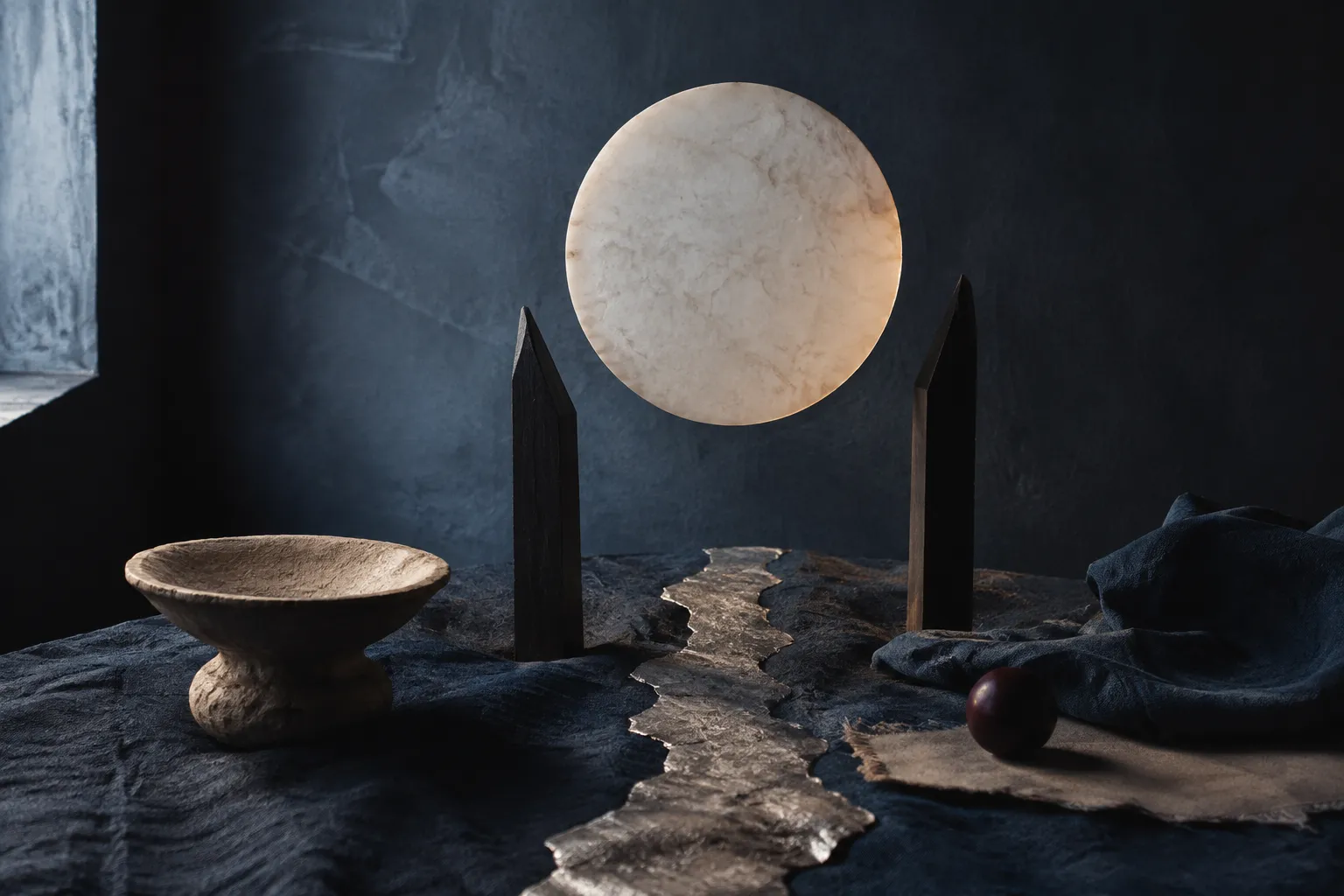
In the Rider–Waite–Smith imagery, published in the early twentieth century, a path recedes between two towers. A dog and a wolf stand on either side; a creature emerges from the water. The scene gathers the domesticated, the wild and the remote—different layers of response to the unknown.
The path continues. That detail matters. The card does not ask us to remain still until certainty is complete. It suggests walking with more attention, allowing each step to reveal information unavailable from the last.
- The towers mark a threshold, not a prison.
- The dog and wolf make the tension between habit and instinct visible.
- Water connects the scene with feeling, memory and imagination.
- The path reminds us that ambiguity can be crossed.
How do we distinguish intuition from fear?
Intuition often arrives briefly and specifically: discomfort, one detail that does not fit, a direction worth checking. Fear tends to multiply scenarios, speed up the body and demand an immediate conclusion. This is not an infallible rule, but it is a difference worth observing.
The Moon grants no immunity from bias. Quite the opposite: it asks us to test. Writing the impression down, finding one more fact, sleeping before replying or asking for another perspective can all be deeply intuitive gestures.
When The Moon appears in a reading
It may point to a creative period, grief that does not yet have language, a relationship with unclear agreements, or a decision made with insufficient information. Its position and neighboring images matter more than any isolated definition.
My favorite reading is not “something bad is hidden.” It is more modest and more useful: you do not see everything yet; tend carefully to your next steps.
Which decision can wait until a little more light appears?
Sources and context
Eira distinguishes documented history, traditional interpretation and editorial reading. Factual claims are accompanied by verifiable context.
- A. E. Waite, The Pictorial Key to the Tarot
A primary historical source for Rider–Waite–Smith interpretations.
- The Metropolitan Museum of Art — Tarot cards
A museum example of early Italian tarocchi.